
What is the Natural Trails Program?
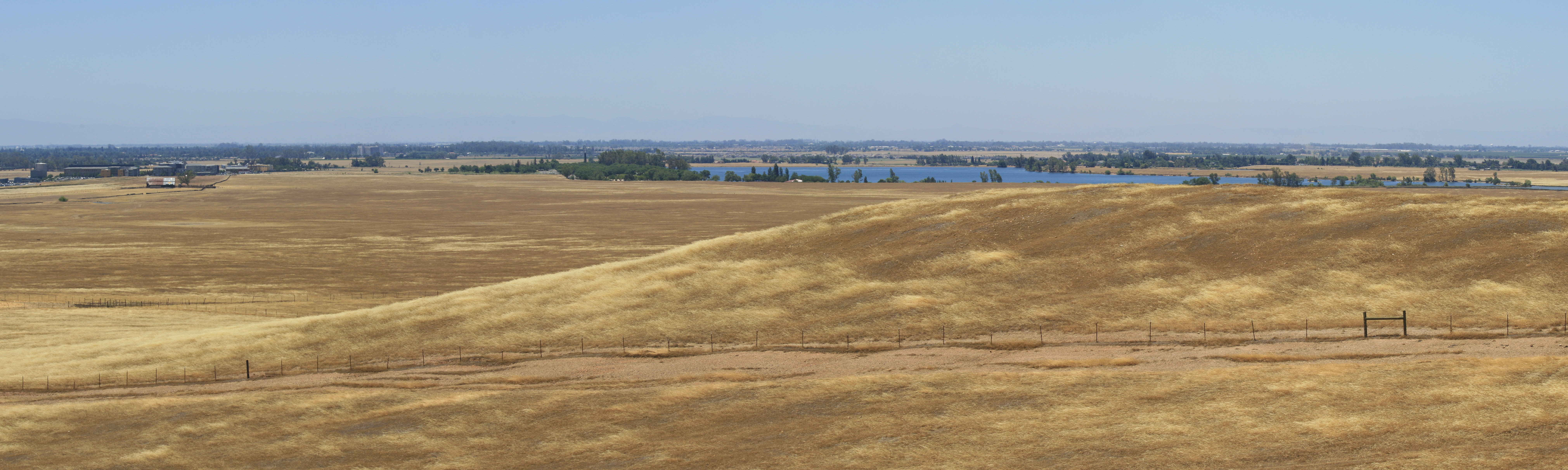
The Natural Trail Program represents an ongoing and carefully crafted project here on our campus, designed to establish a network of trails across our native landscapes. This visionary initiative seeks to seamlessly integrate these precious native spaces into our academic environment, enriching our educational and ecological experiences. Encompassing several acres of land situated off Le Grand Lot, these trails will serve as a bridge between our academic pursuits and the natural world, providing an immersive outdoor classroom where students and visitors can connect with the diverse ecosystems that make our campus unique. As this program develops, it holds the promise of fostering a deeper appreciation for our environment and furthering our commitment to conservation and sustainability.
Key Benefits
This program has been meticulously designed to serve as a multifaceted resource catering to a diverse array of needs within our campus community. Noteworthy examples encompass:
- Facilitating Educational and Recreational Experiences
- The program provides designated recreational and instructional sites, affording students, staff, and faculty an invaluable opportunity to both study and relish the natural environment in a controlled and informative setting.
- Preserving Biodiversity and Ecosystem Health
- It acts as a sanctuary for indigenous flora and fauna, serving as a refuge for various forms of vegetation, wildlife, avian species, and essential pollinators, thus contributing significantly to the preservation of biodiversity.
- Revitalizing an Existing Off-Campus Location
- The program also undertakes the reinvigoration of an established site situated off-campus, exemplifying our commitment to sustainable land management practices.
- Fostering Connectivity with Nature
- By establishing a network of trails, the Natural Trails Program strengthens the vital connection between the UC Merced campus and our surrounding natural environment, promoting a deeper understanding of and engagement with our ecological surroundings.
- Enhancing Health and Wellness
- The provision of jogging and walking trails within the program area enhances the overall health and well-being of our campus community by providing accessible spaces for exercise and relaxation.
While these represent pivotal outcomes of the Natural Trails Program, it is essential to underscore the manifold other opportunities and benefits it bestows upon our campus community. This initiative has the potential to be a transformative force, offering numerous advantages and avenues for exploration, enrichment, and sustainability.
Proposed Trail Location
The selection of the proposed trail system's location has been a meticulous process, guided by the vision of integrating natural habitats with accessibility for our campus community. Our aim is to establish a harmonious space where native flora and fauna can thrive, while remaining easily accessible to faculty, staff, and community members. In envisioning this trail system, we aspire to create a future haven for our local ecosystem and a recreational retreat. The choice of the proposed trail location reflects the extensive consideration given to striking the right balance between ecological preservation and community engagement. It is important to note that at this stage, the trail system remains a visionary plan, awaiting realization.
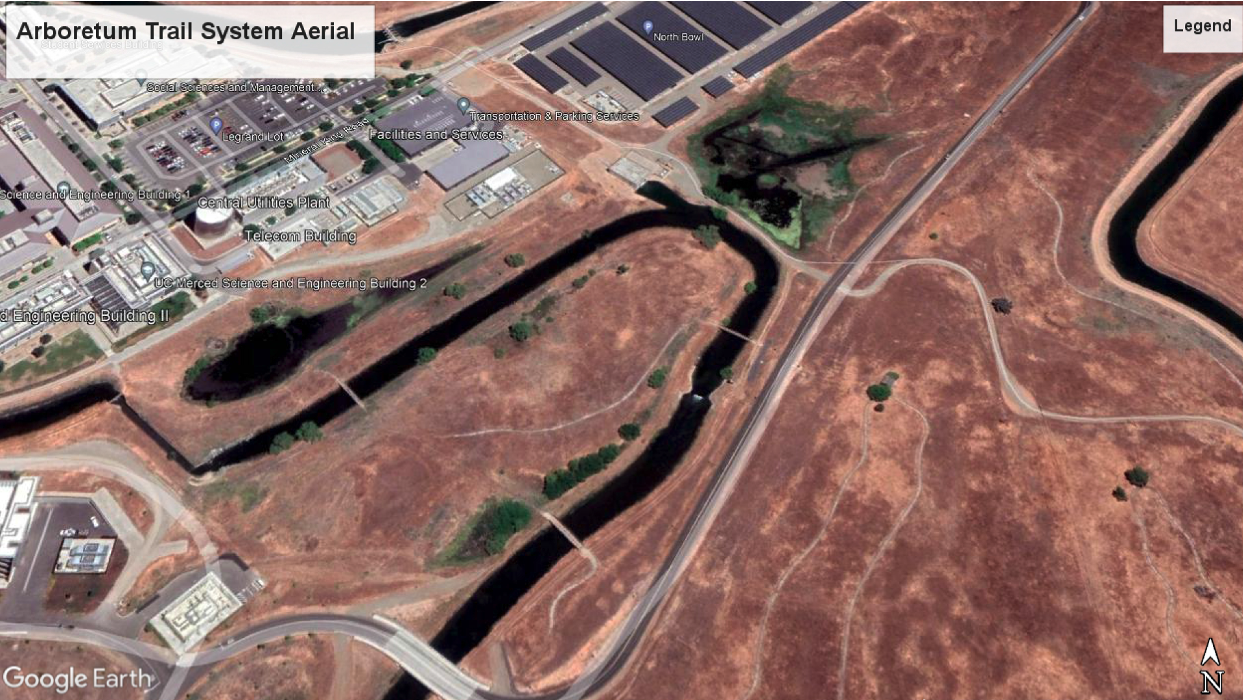
The current proposed trail location is on a lot of natural land right off of Le Grand Lot. As of right now this plot of land is unused and still has residual pathing from the golf course it used to be a part of.
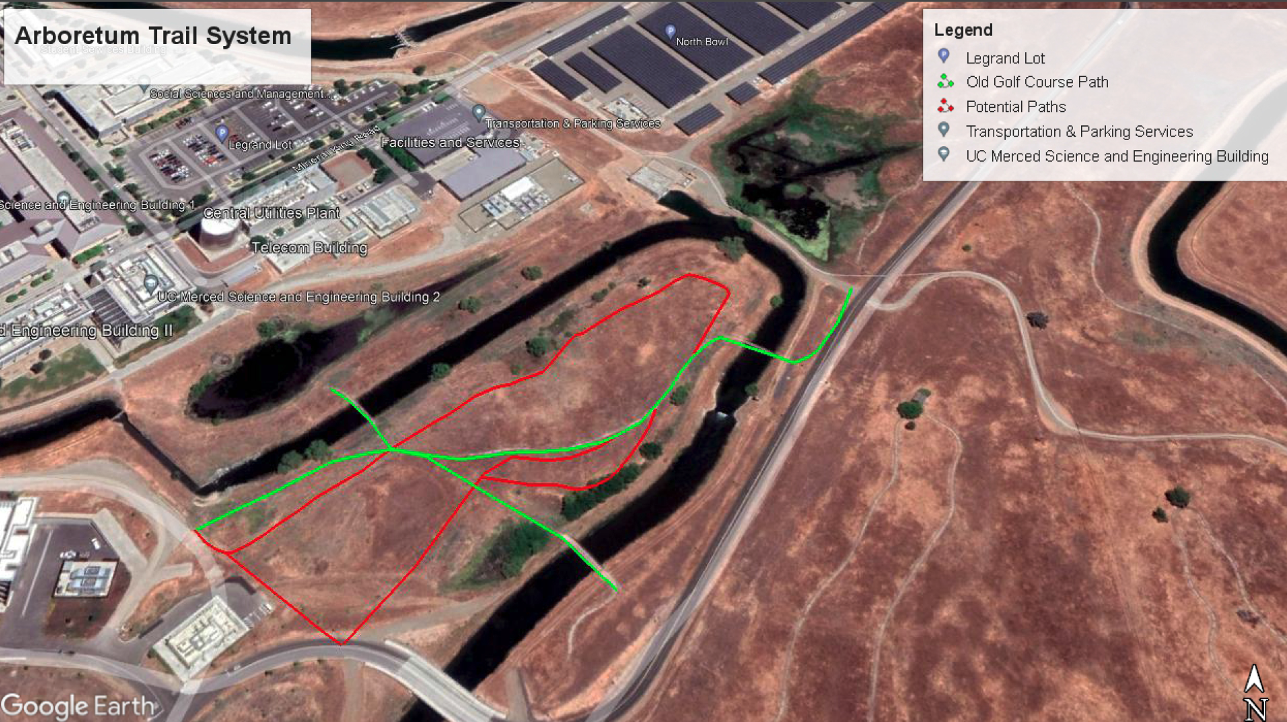
This annotated aerial view of that same plot of land outlines the aforementioned golf course pathing (green) as well as a proposed path for the Arboretum Trail System (red). These proposed trails would be placed to ideally showcase various trees, shrubs, and ground cover featured in the area. Additionally, they would feature multiple access points for faculty, students, and community members to enter through.
Development & Planning
Phase One
This initial phase consists of establishing a master plan for this program as well as the trail system. This is the current phase of the project and will encompass the following tasks:
- Existing Site Condition Documentation
- Outline site with existing paths, bridges, and other infrastructure
- Take inventory of existing trees, shrubs, and plants
- Conceptual Design Layout
- Prepare two design options including paths and planting areas
- Plan path locations, entrances, and exits
- Make recommendations on lansdcape materials
- Make recommendations on hardscape materials
- Conduct code review and recommendation
- Infrastructure Planning
- Prepare a storm water plan
Once these tasks are completed and phase one is finished, the project will advance to phase two and beyond.
Future Phases
Additional phases will be dedicated to developing the green spaces and landscape of the arboretum as described in the master plan from Phase One.