
Our faculty members are the heart and soul of our sustainability community, and they are committed to providing a supportive and enriching experience for all. They bridge the gap between academic research and real-world application, transforming our campus into a testing ground for sustainable innovation, and empowering every student to become an agent of environmental change.
-
Environmental Systems Science Degree Program
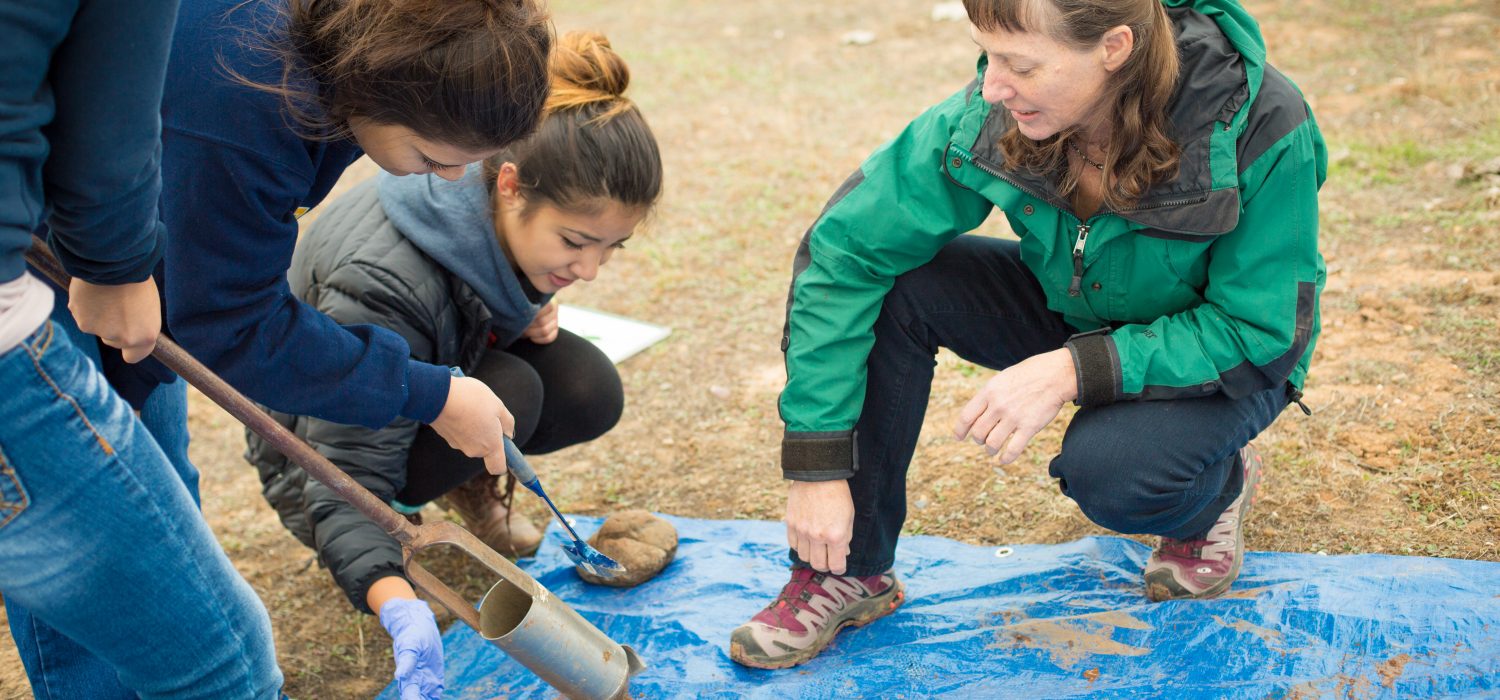
The Environmental Systems Science major is designed to prepare students to meet the challenges of environmental and ecological research in the 21st century. Students who study Earth Systems Science will gain a quantitative understanding of the physical, chemical, and biological principles that control the processes, reactions, and evolution of the Earth as a support system for life. The major emphasizes a highly interdisciplinary approach, incorporating field studies, laboratory experiments, and computations.
Complementary coursework in the social sciences will expose students to the political, economic, and societal implications of human interactions with the environment. A unique aspect of the major is its flexibility - students can select upper-division classes in areas that reflect their individual interests within Earth Systems Science.
This educational experience provides students with knowledge of the foundations of Life and Environmental Sciences and the skills needed to apply Life and Environmental Sciences to real-world phenomena in the social sciences, natural sciences, and engineering.
-
Biological Sciences
There has never been a more exciting and important time to study biology. From using the human genome to understand the molecular and environmental interactions that cause human disease, to predicting the effects of global climate change on ecosystems, it is essential that we understand fundamental processes that produce and sustain life on Earth. The Ecology and Evolutionary Biology emphasis in the Biological Sciences is at the forefront of finding answers to some of scoiety's most vexing problems. Biology students graduating from UC Merced will have a common foundation necessary for biologists in the 21st century, as well as specialized skills and knowledge to aid in their pursuit of careers in biology-related fields or graduate/professional school training.
-
Environmental Science and Sustainability Minor
Environmental science and sustainability is an interdisciplinary academic field that focuses on application of concepts and methods from the physical, chemical, biological and social sciences to the study of the natural environment and seeks solutions to environmental problems. Sustainability science aims to improve the quality of human life within the carrying capacity of supporting ecosystems.
The Environmental Science and Sustainability minor at UC Merced allows students from diverse backgrounds to pursue interests in Earth and environmental sciences in some depth without requiring the breadth of coursework and extensive laboratory and field time required for the Earth Systems Science major.
The Management of Innovation, Sustainability and Technology (MIST) major combines fundamental coursework in leadership, organizations, entrepreneurship, finance, policy, data analytics, science-technology-innovation studies, creativity and change management, technology management, and sustainable innovation. The resulting multi-dimensional "T-shaped" skillset integrates core management skills with a broad understanding of how to design sustainable and equitable solutions by way of teamwork and technology.
The Master of Management (M.M.) 12-month program offered by MIST faculty will provide students with fluency in managerial thinking and practice, enhancing their readiness to fit and succeed in an organization within the private or public sector. The M.M. curriculum is designed for recent graduates looking to complement their undergraduate degree with real-world management knowledge and skills and draws on concepts from business, engineering, natural and social sciences, computing, and data analytics.
The Environmental Humanities major and minor at UC Merced is the first of its kind in the University of California system. This program, centered on the study and analysis of literary, artistic, and creative works about environmental topics drawn from diverse linguistic and cultural backgrounds, has a strong base in literature — where the term “literature” is taken to mean any cultural production that can be “read.” The program includes reading and understanding environmental research as well as creative environmental works. Special attention is paid to environmental justice, Indigenous ways of knowing, Traditional Ecological Knowledge (TEK), Black ecology, BIPOC perspectives, and postcolonial and decolonizing frameworks.
The Environmental Humanities program responds to an urgent need to create clear and inspiring environmental communications. Graduates of this career-oriented program will be professionals who understand environmental science and environmental injustice and can tell compelling stories about the research and data that urges action.
The Ecology, Evolution, and Conservation Biology (EECB) program at UC Merced teaches these ecology, evolutionary biology, and conservation biology as interconnected and dynamic fields of study, emphasizing data-driven ecological analysis, hypothesis testing in evolutionary biology, and practical conservation strategies. The curriculum is underpinned by foundational concepts from various disciplines including Biology, Data Science, and Environmental Sciences. Students opting for the EECB B.S. will gain deep insight into areas such as organismal ecology, the processes giving rise to the Tree of Life, and cutting-edge conservation practices. The EECB B.S. offers two emphasis tracks: the General track, where students have flexibility to tailor their studies to their unique interests and career aspirations, and the Pre-Health track, which provides students with expertise in ecology, evolution, and conservation biology, while simultaneously fulfilling the Medical Education Core Coursework, opening the door to medical school and other health fields.
For more information on academic sustainability please visit the website.


